
How to Get Tennessee Court Records
Match the court first. Read the case paper for the county and the Tennessee court level. For appeals, Tennessee Public Case History (PCH) is the place to look; for trial matters, the clerk holds the case file and docket. The Tennessee Administrative Office of the Courts clerk directory lists the office to contact.
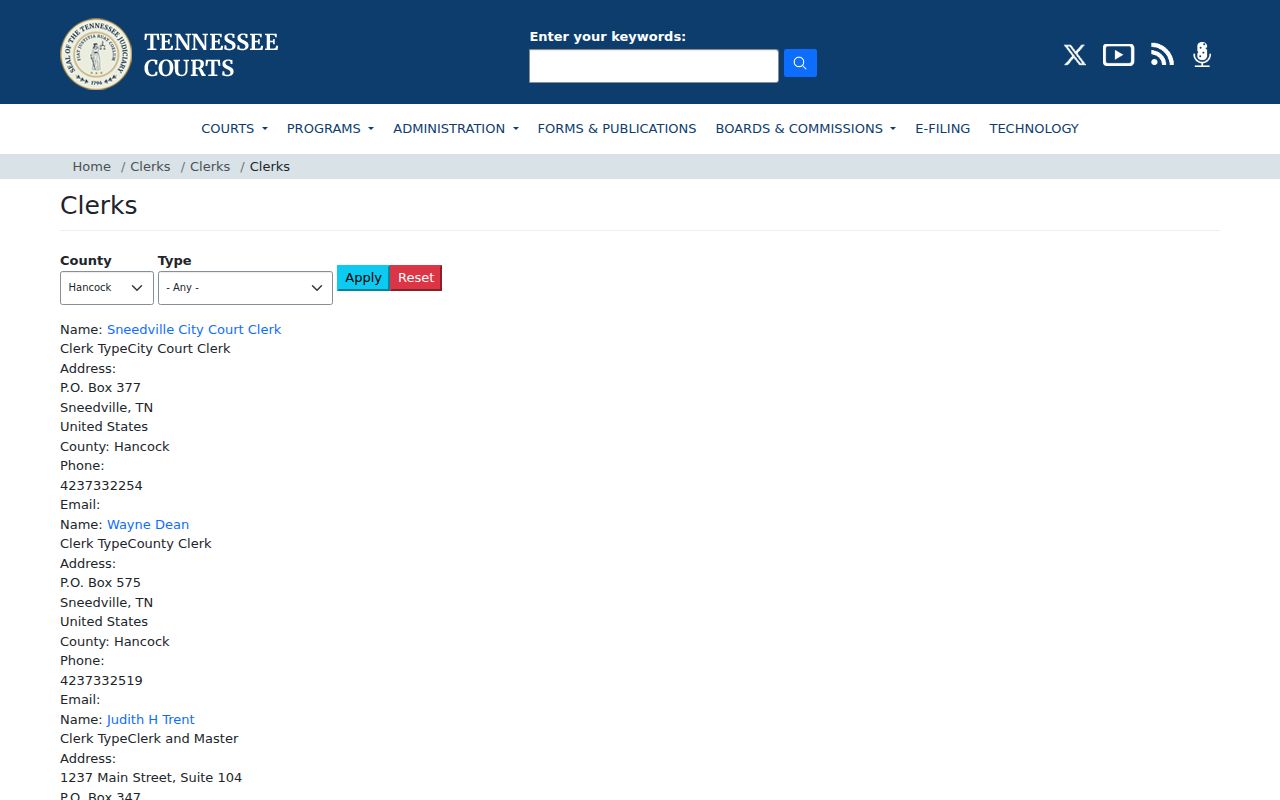
That directory routes court-record requests to Tennessee offices. It is not a statewide case-docket search. Ask each clerk what they offer: an online case index, a terminal, counter inspection, or copies.
- Identify the court, county, and division from the case paper or an existing search result.
- Use PCH for appellate case history; use the county or city clerk for a trial or municipal case record.
- Ask the clerk whether the court record is online, at a public terminal, in paper storage, or restricted.
- For a phone or counter request, give the local case number, party name, approximate date, and exact item sought.
- Use mail, email, fax, drop-box, or an online request only if that office says it accepts the channel; confirm payment and return options first.
For court settings, a Tennessee coordinator confirms scheduling details, while the clerk keeps the filed records. Audio and transcripts come from the reporter or the administrator, not the AOC. The AOC does not retrieve county case files.
Rule 34 and Tennessee Public Court Records
Access to court records in Tennessee rests on Tennessee Supreme Court Rule 34. It yields to statute, rule, or court order where they apply. The Tennessee Public Records Act (TPRA), Tenn. Code Ann. §§10-7-503 et seq., governs public records generally. Those records must be held by government entities. Who holds the record still drives the request. A county clerk keeps Tennessee trial case files and dockets. The Appellate Clerk holds appellate case records, and AOC keeps its own administrative records. The official Tennessee court rules index sets out the access rules. Those rules frame any court-file request.
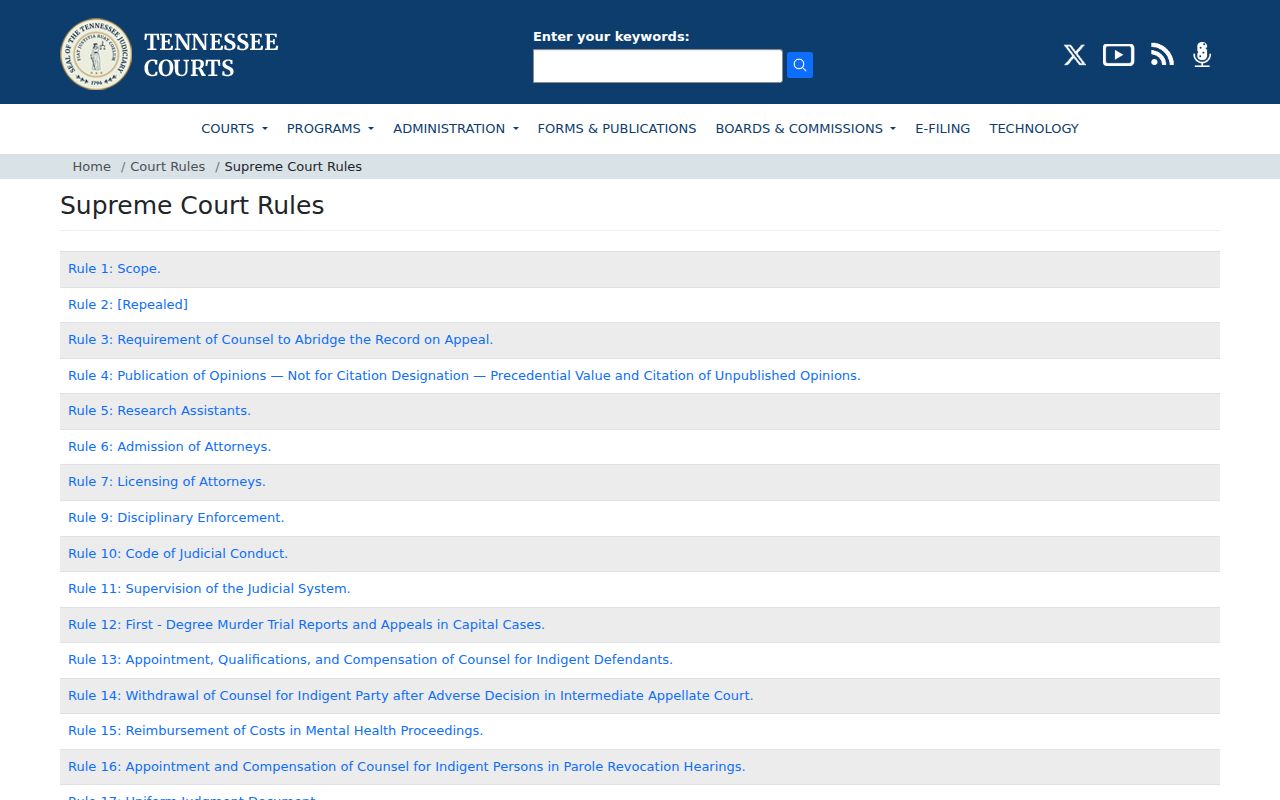
Rule 46 covers e-filing, and neither rule creates one statewide trial-copy form. A TPRA request goes to the public records coordinator of the entity holding the record. If a record is not promptly available, §10-7-503(a)(2)(B) generally calls for production within seven business days. It may instead call for a written denial with its legal basis, or a reasonable estimate. That deadline is not a seven-day delivery promise. Open Records Counsel offers TPRA guidance. AOC keeps its own administrative records. Rule 34 and privacy law govern public court access.
Types of Tennessee Court Records
Know what each product is. A docket lists events. The case file holds the papers: a complaint, motion, affidavit, exhibit, service return, or judgment. A calendar can change. A signed order states the judge's direction, and a disposition may leave out full terms. Audio and transcripts are separate products altogether.
Tennessee Public Case History (PCH) may link appellate motions, orders, judgments, or opinions. Published opinions also appear through a separate AOC service. Federal cases filed in Tennessee run on PACER, a separate court system. The official PACER pricing and fee-waiver page explains the charges for federal document access. It also says who may request a waiver.
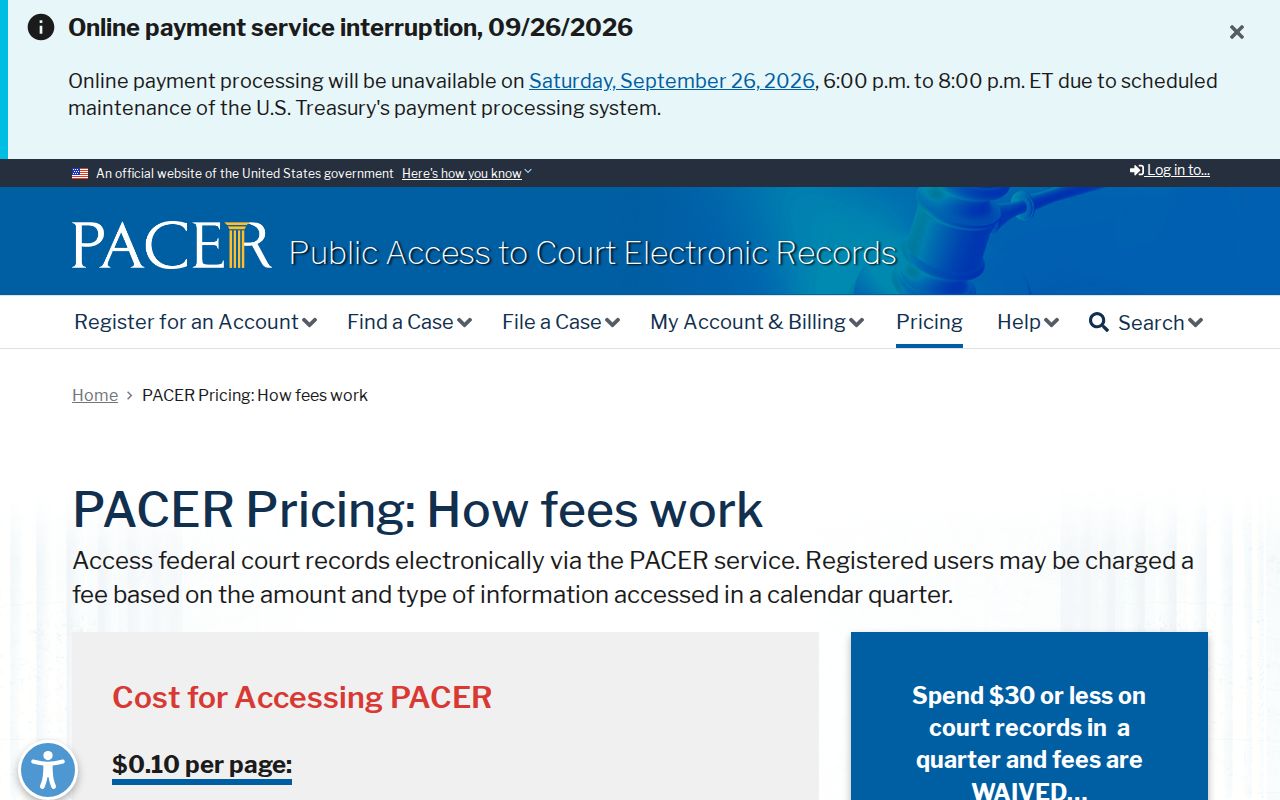
PACER is the federal docket route. It is not a Tennessee county trial-court portal. An appellate case link does not mean lower-court exhibits are online.
Use a Tennessee docket entry to locate a filing. Then ask the clerk for the paper itself. Name a signed judgment for an outcome, or the reporter and hearing date for testimony. Note: A docket entry can point to a document. It may not display the text, image, or complete legal effect.
Docket, Order, Judgment, or Transcript in Tennessee?
Pick the record that fits the question. A docket traces events. A filed paper records a party's submission, and an order records a ruling. A judgment states the outcome, and a transcript records spoken proceedings. Exhibits may be separate or restricted. An index guides the search, but it is not the file.
| Record | What It Shows | Likely Request Route |
|---|---|---|
| Tennessee docket sheet / register | Chronological case entries, hearing settings, and court actions | Clerk holding the Tennessee court's case register |
| Tennessee pleading or motion | A case paper filed by a party and any public attachments | Clerk, local court-record portal, or terminal |
| Tennessee order or judgment | Written court ruling or formal case disposition | Clerk; request a certified court record if needed |
| Tennessee exhibit | Evidence filed in a case, subject to separate record access limits | Clerk or court office that keeps the case exhibit |
| Tennessee audio or transcript | Recorded or transcribed words from a court hearing | Court reporter or trial-record administrator |
| Tennessee appellate filing | Motion, order, judgment, or opinion in an appellate case | PCH appellate record link or Appellate Clerk |
A name or case number finds the record. An index cannot certify it. Ask the Tennessee clerk whether a paper without an image can be inspected or copied, since PDF access varies by office.
What a Tennessee Court Record Contains
What a Tennessee court file contains depends on the court, the case type, and its stage. Use these fields to describe the record you want; trial case-number formats and docket displays vary by county and division.
| Tennessee case number | Local identifier assigned when a case opens; format varies by court, county, division, and year. |
|---|---|
| Tennessee case style / parties | Caption and procedural roles shown in the Tennessee case record; copy names as printed on the notice. |
| Tennessee pleadings and motions | Filed case requests or responses; a docket line may name a paper without including its court-record image. |
| Tennessee orders and judgments | Written court rulings or formal outcomes; ask for the signed and entered case record when its terms matter. |
| Tennessee docket sheet | Chronological court-case event register, narrower than the full case file. |
| Tennessee exhibits and attachments | Case materials tied to a filing; court records may store them separately or restrict access. |
| Tennessee hearing record | Court audio or transcript handled through the applicable reporter or recording process. |
| Tennessee Appellate Case History | Events for a separate appellate case in PCH; not a replacement for the originating trial docket. |
Protected identifiers may be redacted, and access can depend on party status. Give the record title and date when you ask.
Tennessee Court Record Request Fields
Tennessee has no single statewide request form for trial-court copies. Each clerk's office takes copies of court records its own way. You might get a web form, a PDF, or a short written request. Expect the fields to vary from one court to the next. Ask the clerk which delivery and payment methods that Tennessee court accepts. Do that before you send anything in.
| Information | Value / Status | Why It Helps |
|---|---|---|
| Tennessee county, court, division | Needed to route the request | Identifies the likely custodian and records desk |
| Tennessee case number | Provide if known | If missing, add the caption and approximate year or date |
| Tennessee party names / case style | Use the names printed on the Tennessee court paper | Can locate the correct case file or distinguish similar cases |
| Tennessee record sought | Specify case docket, motion, order, judgment, exhibit, transcript, or audio | Separates clerk copies of court records from reporter products |
| Tennessee filing or hearing date | Exact or approximate case date range | Helps find docket entries and older court records in archives |
| Tennessee plain or certified copy | State the court-record choice; request certification explicitly | Case-file certification and page charges differ |
| Tennessee review, delivery, and payment | Follow local Tennessee instructions | Ask about counter, terminal, mail, email, portal, fees, and return address |
| Tennessee authority for restricted record | Conditional, if a statute or order requires it | Public access does not open juvenile, sealed, or other protected material |
One local example: Hamilton County, Tennessee, Clerk & Master's Form 284PR. It asks for contact and residency details. The rest covers inspection or copy, delivery, record type, dates, subject terms, notes, and a signature. There is no ID field and no turnaround promise. Electronic delivery is only a preference; the form directs mailing with an advance estimate. Other Tennessee offices may differ.
Tennessee Certified Copies and Fees
A certified copy of a Tennessee court record carries the clerk's seal. A plain printout lacks that seal. Tenn. Code Ann. §8-21-401(i) sets the base cost at $0.50 per page copied. The certification or seal adds $5. Clerks vary on how they handle case files and what they charge. Transcripts, court filings, appellate records, and vendor fees fall outside these rates.
| Record / Service | Statewide Base or Rule | What to Confirm Locally |
|---|---|---|
| Tennessee court-record inspection | No general case-copy charge identified for ordinary public inspection | Case terminal, appointment, hours, device, and archive rules |
| Tennessee plain court copy | $0.50 per case-record page under §8-21-401(i)(4) | Page count, electronic delivery, postage, payment, and local docket-service charge |
| Tennessee certified court copy | $5 certification/seal under §8-21-401(i)(5), plus case-record page charges | Which court record is certified and the total for pages and delivery |
| Tennessee same-time recording duplicate | $50 under Rule 26 for authorized electronic recording media | Whether Rule 26 applies and how the clerk or administrator takes payment |
| Tennessee later recording duplicate | $100 under Rule 26 for authorized electronic recording media | Ask the trial administrator; transcript preparation is separate |
| Tennessee transcript | Reporter rate; no single clerk-copy price | Obtain an estimate and schedule from the reporter or administrator |
Fees differ county to county. The official Knox County, Tennessee, Criminal Court Clerk copy-services page is one local example, not a statewide price list.
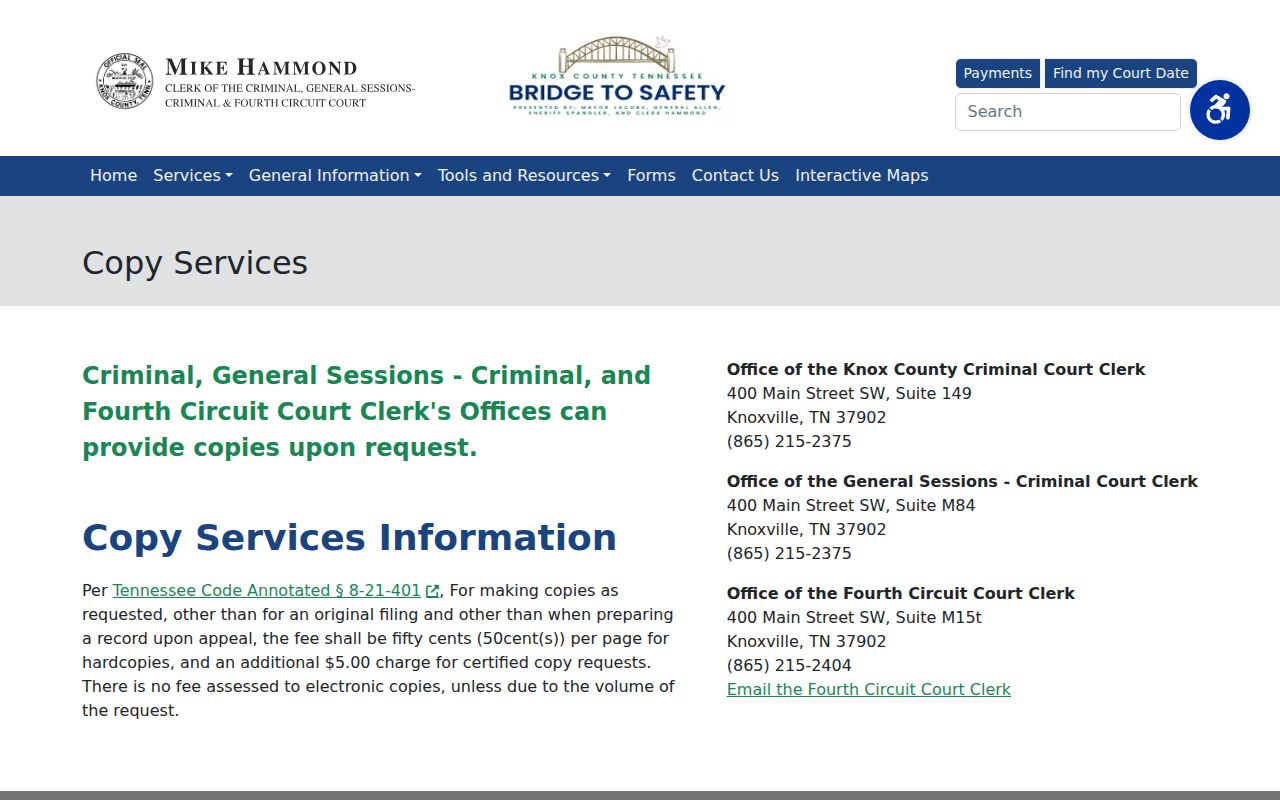
Ask the holding clerk for the total cost, including page charges, delivery, portal, or archive costs. Note: A certified copy authenticates the court copy; it does not add facts that are absent from the filed record.
Tennessee Rule 26 Recording Copies and Transcripts
Copies of court recordings cost money in Tennessee. Under Rule 26, a duplicate of an authorized electronic recording runs $50 if you ask when the event is requested. Ask afterward, and the price is $100. Transcripts are priced separately. When you order, provide the court, division, case number, and hearing date. Also check with the reporter on what formats exist.
Appellate filings follow a different set of rules. Supreme Court Rule 46 covers e-filing for appeals. The Rule 46 electronic-filing resource lays out that framework. It is an appellate filing rule, though, not a public portal for trial court dockets.
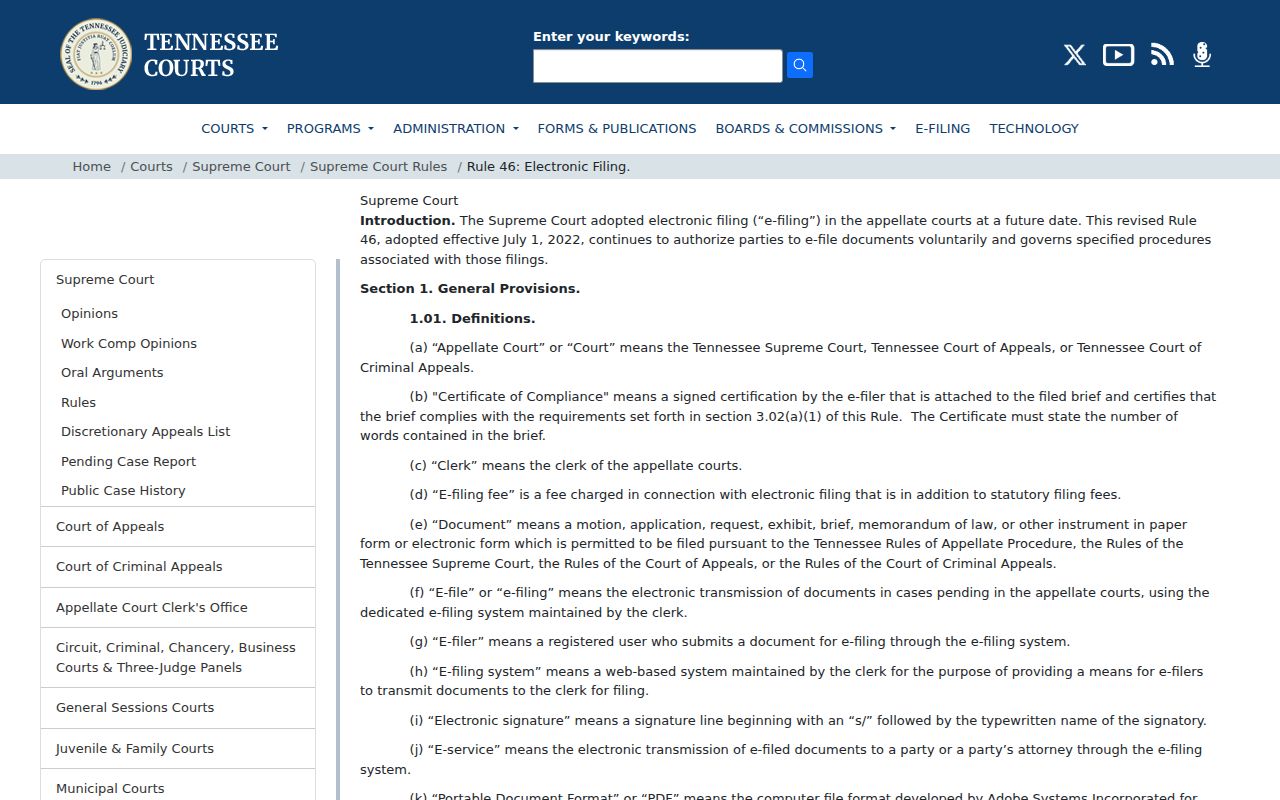
Two rules govern appellate paperwork in Tennessee. Rule 46 controls what gets submitted. Rule 20B, effective July 1, 2026, handles public access and redaction for appellate filings. Trial court files stay local at the county level. Audio and transcripts take their own separate request process.
Older Tennessee court records may sit in any one of several states. Ask the clerk whether the case file is active, archived, microfilmed, or stored as paper. There is no statewide archive search, and no verified retrieval fee. Any cost depends on the office that actually holds the file.
Tennessee Public Access and Sealed Records
Tennessee Rule 34 presumes the public can view court records. That presumption works within the law and any court order. Juvenile files are usually closed under Tenn. Code Ann. §37-1-153. Adoption records follow their own confidentiality rules. A sealed case may drop from the docket or show only a shell entry. The docket itself never says why.
Access rules to keep in view
Tennessee Supreme Court Rule 34 governs public access to court records, subject to exceptions in law, rule, or order.
Tennessee Public Records Act guidance explains requests to the government entity that holds an administrative public record; it is not a county case-file search service.
Tenn. Code Ann. §20-6-104 protects specified personal identifiers in court records, while §37-1-153 generally restricts juvenile files. Ask the clerk about the controlling rule or order for a specific item.
A party to a case can often see what the public cannot. The clerk can explain what proof or permission you need, but cannot waive confidentiality. Not every family file is sealed; the limits depend on the law. The AOC records policy covers administrative records held by AOC, not files kept by county trial clerks.
Find the Tennessee Record Clerk
Who holds a Tennessee court record depends on the division. A Circuit Court Clerk often serves General Sessions too, though some counties keep separate Criminal, Sessions, Juvenile, or municipal clerks. Chancery records usually sit with a Clerk and Master. Confirm the division before requesting a copy, and use Counties to reach the local Tennessee sites.
Pick the right route for what you need. Local records belong to the Tennessee trial custodian, appeals go through the Appellate Clerk or PCH, and AOC handles its own administrative records. A TPRA request should go to the records coordinator at the agency involved. These channels do not overlap.
A written request works best when it is complete. Include the case number or caption, the court, the date, the record you want, the copy type, and how you want it returned. Confirm which channels and payment methods the clerk accepts. If a docket search comes up empty, ask about the division, the years covered, transfers, archives, or alternate spellings of a name. No single statewide method or turnaround time applies.